
2026-09-26
Why Is There Water in Compressed Air Lines After the Aftercooler?
Water in compressed air lines after the aftercooler usually points to high CTD, a clogged drain or poor moisture separation. Learn how to diagnose the cause and specify a reliable replacement.
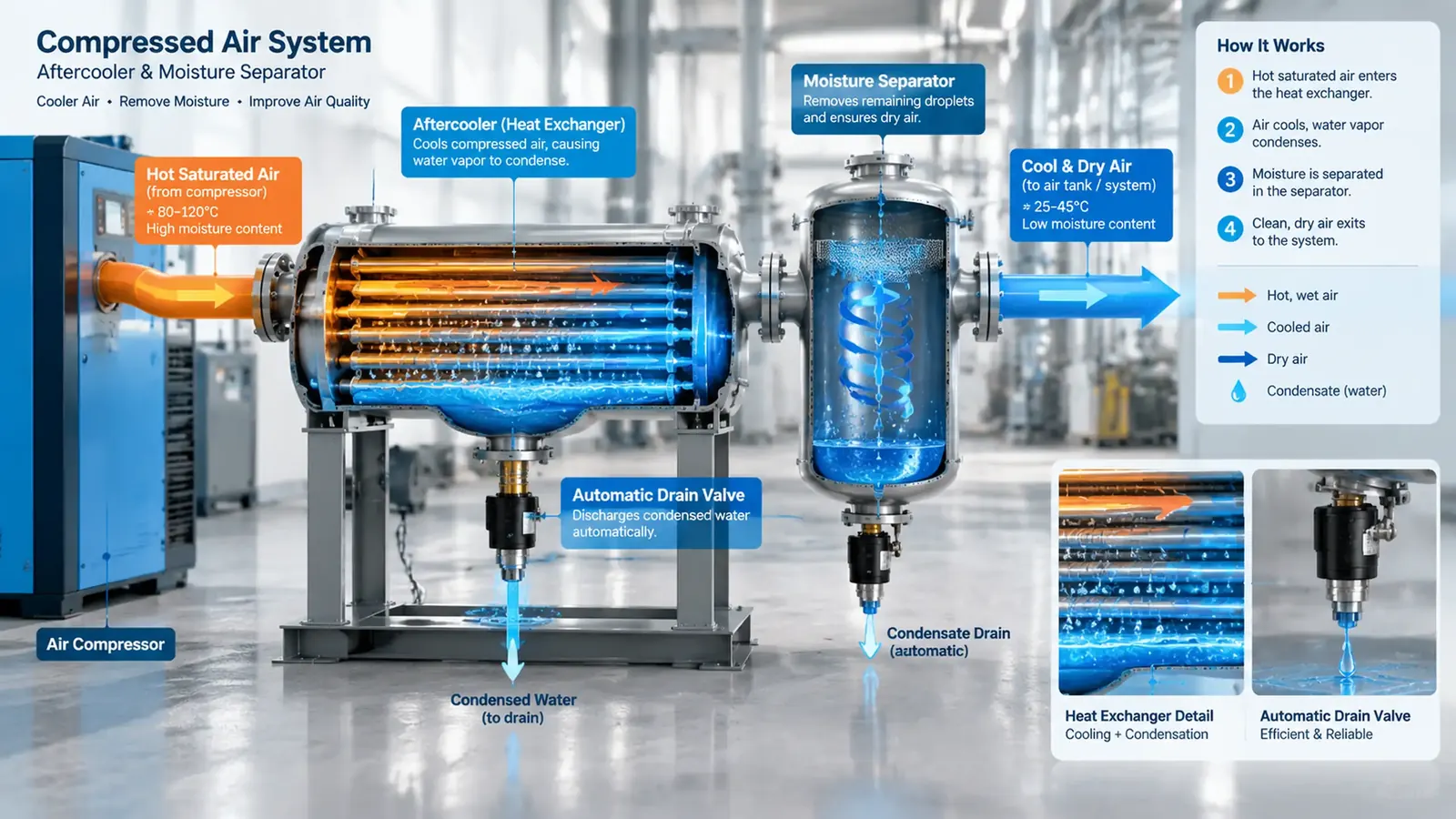
Figure 1: Causes of moisture carryover in compressed air aftercoolers.
Quick Answer: Water in compressed air lines after the aftercooler is primarily caused by insufficient cooling, poor condensate separation or a faulty drain. Check whether the aftercooler is maintaining a suitable outlet temperature and CTD, confirm that the moisture separator is draining correctly, and verify that compressor discharge conditions are within the cooler's rated CFM and temperature limits. If the cooler is fouled, undersized or internally restricted, replace it with a correctly rated unit that includes an effective separator and drain arrangement.
Water in compressed air lines after the aftercooler is a system problem, not just a drain problem. Compressed air leaves the compressor with a high moisture load. The aftercooler lowers the air temperature so water vapor can condense, but condensation must then be separated and discharged before the air enters receivers, dryers, filters and production piping.
If liquid water continues downstream, the cause is usually one of three conditions: the aftercooler is not cooling effectively, the separator or drain is not removing the condensate, or the compressor is operating outside the aftercooler's design envelope. Diagnosing those three areas first prevents unnecessary replacement and restores stable compressed air quality.
What Does Water Carryover After an Aftercooler Mean?
An aftercooler reduces the temperature of compressed air after the final compression stage. As the air cools, its capacity to hold water vapor falls. When the air reaches the pressure dew point, moisture condenses into liquid droplets.
The heat exchanger does not remove those droplets by itself. A moisture separator must collect them, and an automatic drain must discharge them from the system. If either function is poor, condensate remains in the air stream and appears as water in compressed air lines after the aftercooler.
A useful diagnostic value is CTD, the difference between the compressed air outlet temperature and the cooling air inlet temperature:
CTD = Aftercooler Air Outlet Temperature - Cooling Air Inlet Temperature
A lower CTD indicates closer temperature approach and generally more condensation inside the aftercooler. A high CTD can leave moisture in vapor form until the air cools further downstream, where separation may be less effective.
3 Common Causes of Moisture Carryover Post-Aftercooler
1. Failed, Fouled or Undersized Aftercooler
The aftercooler may be mechanically intact but thermally ineffective. Dust, oil scale or internal fouling reduces heat transfer, while a cooler selected for a lower CFM or cooler inlet condition cannot handle the actual compressor duty.
Typical signs include:
- High compressed air outlet temperature
- CTD above the design target, often greater than 10°C in ambient-cooled systems
- Rising pressure drop across the cooler
- Hot air entering the separator and dryer
- More condensate reaching downstream filters than expected
A replacement must be selected from the compressor's maximum CFM, discharge temperature, working pressure and ambient condition, not from connection size alone. Review the OEM replacement air compressor aftercooler and oil cooler range for machine-specific replacement options.
2. Clogged or Broken Condensate Drain
A functioning moisture separator can still carry water if its drain fails. Dirt, rust, oil emulsion or frozen condensate can block the valve. A damaged solenoid, pilot line or timer can also prevent the drain from opening at the correct interval.
Check for these conditions:
- The separator bowl remains full after the drain cycle
- Water slugs travel through the piping intermittently
- The drain releases air continuously but little water
- The drain does not operate when manually tested
- The strainer or discharge line is blocked
Use a drain arrangement suited to the compressor duty. Zero-air-loss or level-controlled drains can reduce air loss, but they still require a strainer, service access and freeze protection where applicable.
3. Excessive Compressor Discharge Temperature
The aftercooler cannot compensate for an unlimited inlet temperature. A hot compressor, high compression ratio, cooling-system fault, restricted oil cooler or high ambient condition can raise discharge temperature beyond the aftercooler's rated inlet condition.
Inspect the compressor package as a complete thermal system. Compressor oil temperature, coolant flow, ventilation, fan operation and package recirculation can all affect discharge air temperature. If the compressor is running too hot, correcting the aftercooler alone will not solve the moisture problem.
CTD and Water Carryover Troubleshooting Table
| Symptom | Likely Cause | First Check | Corrective Direction |
|---|---|---|---|
| High outlet air temperature | Fouled, undersized or restricted aftercooler | Temperature and pressure drop across cooler | Clean, repair or replace with correctly rated cooler |
| High CTD | Insufficient temperature approach | Compressed air outlet vs cooling air inlet | Confirm cooler capacity and cooling airflow |
| Separator remains full | Failed automatic drain | Valve, strainer, timer and pilot line | Clean, repair or replace drain assembly |
| Water only after long running | Drain cycle or separator sizing problem | Drain sequence and condensate load | Adjust cycle and verify separator capacity |
| Water plus high compressor temperature | Compressor discharge condition outside design | Compressor oil and cooling system | Correct compressor condition before cooler replacement |
The specific CTD target depends on the aftercooler design, cooling medium, climate and required pressure dew point. A target below 10°C is a common troubleshooting reference for ambient-cooled systems, but a dryer may still be required to reach the process dew point.
How to Troubleshoot Water in Compressed Air Lines Step by Step
- Record the operating conditions. Measure compressor discharge temperature, aftercooler outlet temperature, cooling air or water inlet temperature, working pressure and pressure drop under stable full-load operation.
- Calculate and interpret CTD. Compare the calculated value with the aftercooler specification. A rising CTD under the same load often indicates fouling, airflow loss or reduced cooler performance.
- Inspect the separator. Confirm that the air path is correct, the bowl is not flooded and the element or internal separation device is clean and intact.
- Test the automatic drain. Manually cycle the valve and confirm that condensate discharges without continuous air loss. Check the strainer, discharge line and freeze protection.
- Check compressor heat load. Review oil temperature, coolant flow, fan operation and package ventilation. High discharge temperature can overload an otherwise suitable aftercooler.
- Review the original selection. Confirm the rated full-load CFM, inlet temperature, pressure and allowable pressure drop. If the compressor was modified or operated at a higher duty, the original cooler may be undersized.
- Inspect the cooler internally where possible. Sludge, corrosion or a blocked passage can reduce performance even when the external fins look clean.
For a complete system review, see our compressor and vacuum pump cooling solutions.
How to Prevent Water in Compressed Air Lines
- Verify aftercooler outlet temperature and pressure drop during normal full-load operation, not only after maintenance.
- Keep the heat exchanger fins and cooling-water passages clean.
- Select the aftercooler using maximum CFM, maximum discharge temperature and the site's real ambient condition.
- Install or maintain a separator immediately downstream of the aftercooler.
- Use an automatic drain with a correctly sized strainer and a discharge path that cannot freeze or back up.
- Pipe condensate away from the air stream and provide gravity drainage where practical.
- Confirm that the dryer rating matches the compressor flow and required pressure dew point.
- Record temperature, pressure drop and drain behavior after every major service so changes are visible before production is affected.
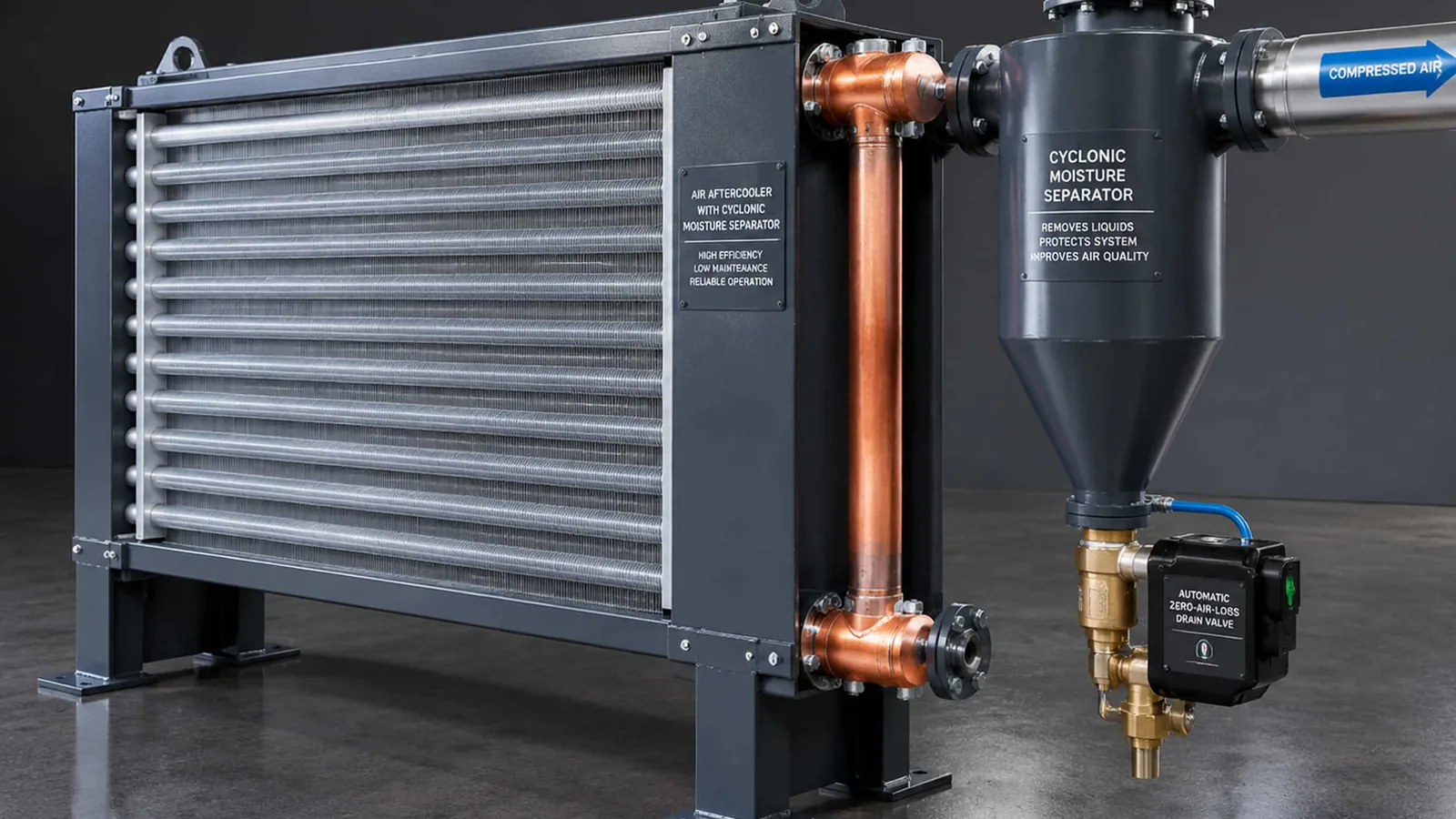
An industrial compressor aftercooler should be specified as part of the complete compressed air system. The cooler, separator, drain, receiver and dryer must work together.
What to Specify in a Replacement Aftercooler
| Design Input | Why It Matters |
|---|---|
| Compressor make and model | Confirms the replacement envelope and connection arrangement |
| Full-load CFM | Determines air-side heat load and internal flow area |
| Discharge air temperature | Defines the maximum inlet duty of the aftercooler |
| Working pressure | Controls pressure-containing design and air density |
| Ambient or cooling-water temperature | Sets the available temperature approach and CTD |
| Required outlet temperature | Determines whether the dryer can achieve the target dew point |
| Allowable pressure drop | Protects compressor efficiency and downstream pressure |
| Separator and drain arrangement | Ensures condensed water leaves the system instead of carrying over |
| Installation envelope and connections | Prevents a thermally correct cooler from becoming an installation problem |
For custom replacement or OEM development, send the compressor model, old part details, drawings and operating conditions. Our engineers can review the custom aftercooler design against the full compressor package.
FAQ
Why is there water in compressed air lines after the aftercooler?
Water carryover is normally caused by insufficient cooling, poor condensate separation or a condensate drain that cannot discharge. Check the aftercooler outlet temperature, CTD, separator condition and automatic drain before replacing the cooler.
What is CTD in a compressed air aftercooler?
CTD is the temperature difference between the compressed air leaving the aftercooler and the cooling air entering it. A high CTD means the aftercooler is not cooling the air close enough to the available ambient or cooling-medium temperature, so more moisture remains as vapor until it condenses downstream.
Can an aftercooler remove water by itself?
No. An aftercooler creates the conditions for water vapor to condense, but a separator and drain must remove the liquid. In many systems, a dryer is also required to achieve the pressure dew point needed by the process.
How do I know if the automatic condensate drain has failed?
Common signs include a separator that remains full, intermittent water slugs in the pipework, continuous air leakage from the drain, or no discharge during the drain cycle. Inspect the valve, strainer, pilot line and control timer and compare them with the manufacturer's sequence.
What information is needed for a replacement aftercooler?
Provide the compressor make and model, full-load CFM, discharge temperature, working pressure, ambient or cooling-water temperature, allowable pressure drop, available envelope, connection sizes and required outlet temperature. Photos of the installed cooler and separator help confirm the replacement layout.
Need Help with Aftercooler Water Carryover?
Send us the compressor model, full-load CFM, discharge temperature, operating pressure and photos of the installed aftercooler and separator. Our engineers will review the moisture problem and recommend the correct replacement or custom cooling solution.
Request an Aftercooler Review and Quote
Need Help Selecting an Oil Cooler?
Send us your specs or drawings and our engineers will size the right cooler for you within 24 hours.
Get a Free Quote Chat on WhatsApp