
2026-09-05
Bar and Plate vs Tube and Fin Heat Exchanger: Which Should You Choose?
Choosing between a bar and plate and a tube and fin heat exchanger comes down to pressure rating, weight and thermal efficiency. Compare the two designs, then download the free PDF guide.
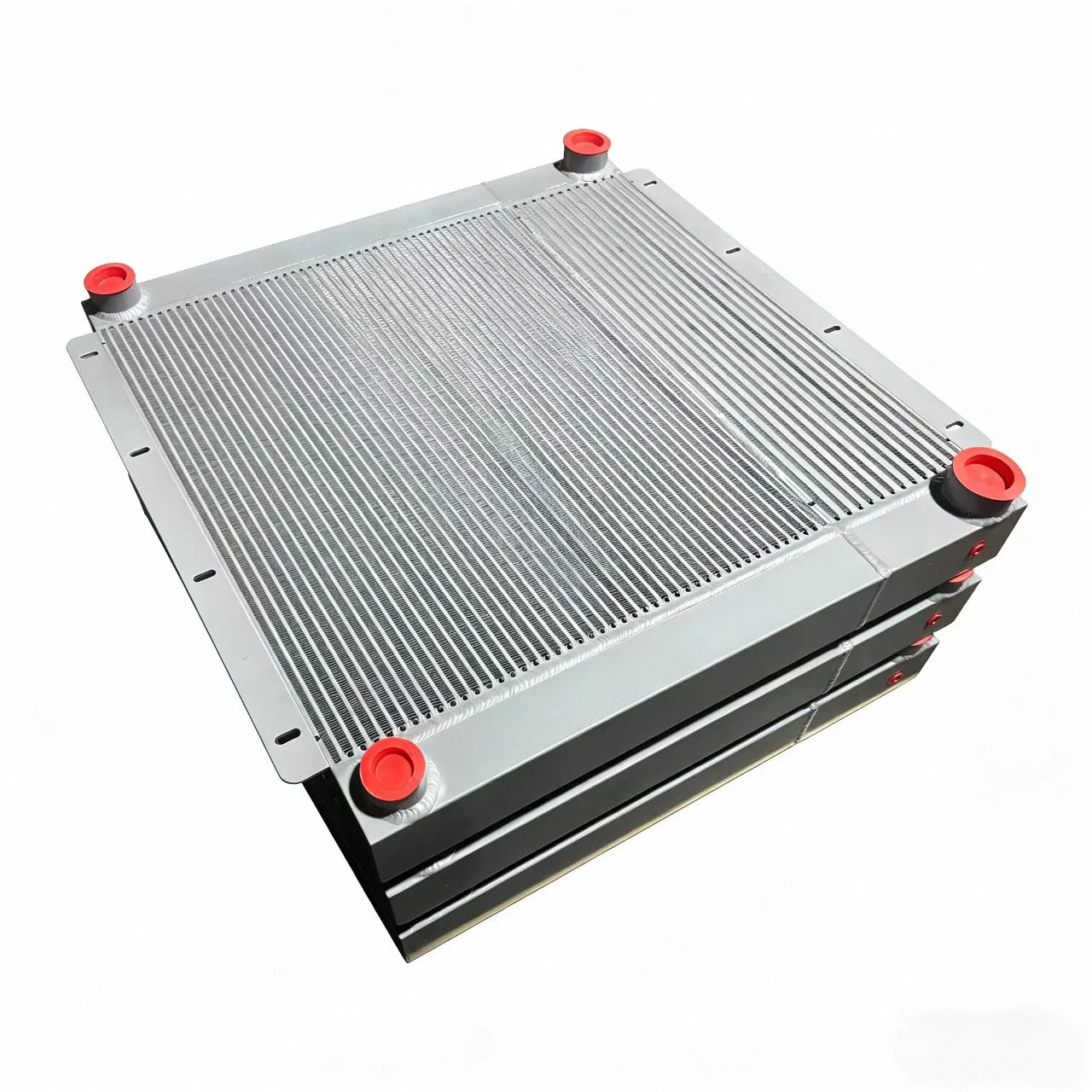
Figure 1: High-pressure aluminum bar and plate heat exchanger designed for heavy-duty industrial applications.
Quick answer: Choose a bar and plate heat exchanger when the circuit needs high pressure capability, a compact heat-transfer core, rugged construction or predictable performance under pressure spikes. Choose a tube and fin heat exchanger when lower installed weight, simpler construction and lower initial cost matter more than maximum pressure capability or heat-transfer density. The right answer depends on the complete duty cycle, not one specification.
This guide compares the two designs for industrial oil cooling, hydraulic systems and compressed-air applications. It also explains where common simplified rules become misleading - especially when pressure, viscosity, fouling and service access change the result.
Bar and Plate vs Tube and Fin: Quick Comparison
| Selection Factor | Bar and Plate | Tube and Fin |
|---|---|---|
| Typical construction | Stacked plates, bars and fins vacuum-brazed into one core | Tubes with fins attached or brazed around them |
| Pressure capability | Usually higher for the same envelope; exact rating depends on design | Often lower, but brazed industrial designs can still handle moderate pressure |
| Heat-transfer density | High; more heat transfer in a compact core | Generally lower per unit volume |
| Weight | Usually heavier for comparable duty | Often lighter |
| Pressure drop | Design-dependent; compare at actual flow and viscosity | Design-dependent; tube count and fin geometry control the result |
| Fouling risk | Narrow, dense passages can retain fine debris | More open geometry may be easier to inspect or clean in some designs |
| Vibration and thermal cycling | Rigid plate-and-bar structure is well suited to severe duty | Performance depends on tube-to-fin joints and support design |
| Repair approach | Usually replace the damaged core or module | Some designs can be repaired, depending on construction |
| Initial cost | Generally higher | Generally lower |
| Best fit | High-pressure hydraulics, compressor oil, mining and heavy machinery | Lightweight or cost-sensitive systems with suitable pressure limits |
The table is a starting point only. A supplier must confirm the rated pressure, burst pressure, pressure drop, fluid compatibility and thermal performance for the actual operating point.
How a Bar and Plate Heat Exchanger Is Built
A bar and plate core is assembled from alternating layers of plates, fins and solid bars. The stack is placed in a vacuum-brazing furnace, where filler metal joins the layers into a rigid aluminum block. Internal passages are formed between the plates, while the bars separate the fluid circuits and reinforce the structure.
This construction gives engineers several important options:
- Different passage heights for oil, coolant or air
- High-strength internal geometry for pressure spikes
- Multiple fluid circuits in one compact core
- Custom inlet and outlet positions
- Reinforced tanks, flanges and mounting points
- Black coating or corrosion protection for harsh environments
A bar and plate exchanger is often selected for bar and plate oil cooler assemblies, heavy-duty hydraulic circuits, flange-connected excavator coolers and high-pressure compressor oil systems. The same construction can also be used for liquid-to-liquid and liquid-to-air heat exchange, depending on the circuit design.
How a Tube and Fin Heat Exchanger Is Built
A tube and fin exchanger uses tubes to contain the pressurized fluid and fins to increase the external surface area. Fins may be mechanically expanded onto the tubes, soldered, brazed or otherwise bonded, depending on the manufacturing method and application.
Tube and fin construction is common where:
- Low weight is more important than maximum heat-transfer density
- The operating pressure is within the tube and joint rating
- A larger face area is available
- Lower initial cost is a priority
- The design benefits from a more open core geometry
Tube and fin designs are widely used in automotive radiators, charge-air coolers, refrigeration coils and some industrial cooling systems. However, the phrase "tube and fin" covers many constructions. A mechanically expanded automotive radiator and a brazed industrial heat exchanger do not have the same pressure or thermal limits. Always compare the actual design, not only the category name.
Pressure Rating: Where the Selection Usually Starts
Bar and plate construction is generally preferred when pressure is the governing requirement. Its stacked plate and bar structure can distribute internal loads across a rigid brazed core, making it suitable for hydraulic systems that experience pressure spikes or high continuous pressure.
Tube and fin construction can also be pressure-rated when the tubes, joints and headers are designed correctly. The limiting factor is usually the tube wall, joint method, header connection and support structure - not the presence of fins.
For a hydraulic or compressor project, ask the supplier for:
- Maximum working pressure
- Proof or test pressure
- Burst pressure
- Allowable pressure-cycle count
- Pressure-drop curve at the operating flow
- Temperature derating, if applicable
Do not compare only a headline pressure number. A core that passes a static pressure test may still fail under vibration, thermal cycling or repeated pressure pulses.
Thermal Efficiency and Pressure Drop
Bar and plate cores usually achieve higher heat-transfer density because the plates and fins create a large surface area in a compact package. The designer can also tune passage height, fin density and flow arrangement to balance heat transfer against pressure drop.
Tube and fin designs can be thermally efficient when the available face area is large enough and the airflow or coolant flow is well distributed. Their advantage is often lower weight and simpler manufacturing, not maximum heat transfer per unit volume.
Pressure drop deserves equal attention. A high-density bar and plate core can create excessive pressure drop if the oil is cold or highly viscous. A tube and fin design with fewer tubes can also create high velocity and poor distribution. The correct comparison uses:
- Actual flow rate
- Fluid viscosity at operating temperature
- Inlet and outlet temperature
- Allowable pressure drop
- Air or coolant flow
- Fouling allowance over time
Our guide to high pressure drop in oil coolers explains how passage design affects pump load and cooling performance.
Weight and Installed Space
Tube and fin cores are often lighter for the same external face area because the tubes and fins use less solid material than a plate-and-bar stack. This makes tube and fin attractive for automotive, motorsport and aerospace applications where every kilogram matters.
Bar and plate cores are usually heavier, but they can deliver more heat transfer in a smaller envelope. In mobile machinery, the installed system may still be lighter overall if a smaller core reduces the required fan, mounting frame or coolant volume.
Compare the complete installed package:
- Dry and wet weight
- Core volume
- Fan or blower power
- Mounting structure
- Guard and service clearance
- Piping and connection weight
Fouling, Cleaning and Service Life
Dust, oil sludge and mineral scale affect the two designs differently. Bar and plate cores can contain dense internal or external passages that are difficult to inspect and clean once contamination enters. Tube and fin cores may offer more open geometry, but closely spaced fins can still bridge with dust or mud.
For mining, quarry and construction equipment, the selection must consider:
- Dust concentration and particle size
- Oil contamination and sludge
- Cleaning method and access
- Fin spacing
- Corrosion protection
- Replaceable guards and filters
A wider fin pitch or a more open core may be more valuable than a small gain in heat-transfer density. The maintenance procedure should be defined before the cooler is installed, not after the first overheating event.
Vibration, Thermal Cycling and Repair
Heavy machinery subjects a cooler to engine vibration, hydraulic pulses, shock loads and repeated temperature changes. Bar and plate cores are often selected for these conditions because the brazed plate-and-bar structure can be reinforced at tanks, brackets and connection points.
Tube and fin cooling packages can also survive severe duty when the tubes are properly supported and the joints are designed for vibration. The risk is concentrated at tube-to-header and tube-to-fin joints, especially when the cooler is mounted rigidly or the hoses transfer load into the core.
Repairability also differs. Tube and fin radiators may be repairable in some workshops, while a damaged bar and plate core is often replaced as a module. For remote mining operations, the availability of replacement parts may matter more than the theoretical repair cost.
Cost, Tooling and Lead Time
Bar and plate construction usually costs more because it requires more material, precise stacking and controlled vacuum brazing. Tooling and fixture costs can also be higher for a custom pressure-rated design.
Tube and fin construction often has a lower initial cost for equivalent face area, but the total cost can change when the system requires:
- A larger core
- Higher fan power
- Stronger mounting
- More frequent cleaning
- Shorter replacement intervals
For OEM programs, evaluate cost over the full service life rather than only the unit price. A cooler that avoids downtime, protects the pump and maintains stable temperature may justify a higher initial cost.
Decision Matrix by Application
| Application | Preferred starting point | Why |
|---|---|---|
| High-pressure hydraulic power unit | Bar and plate | High pressure capability, compact core and reinforced connections |
| Excavator or mining hydraulic system | Bar and plate | Pressure spikes, vibration and severe dust |
| Compressor oil cooling | Bar and plate or custom plate-fin | High heat density and pressure capability |
| Compressed-air aftercooler | Depends on pressure and airflow | Compare pressure drop, moisture and fouling |
| Engine radiator | Tube and fin is common | Large airflow face and established automotive manufacturing |
| Charge-air cooler | Tube and fin or bar and plate | Weight, pressure and packaging determine the choice |
| Aerospace or motorsport | Tube and fin often preferred | Weight reduction is critical |
| Large stationary industrial cooler | Application-dependent | Space, cleaning and pressure drop may matter more than weight |
When to Choose Bar and Plate
Choose bar and plate when:
- The circuit operates at high pressure or experiences pressure spikes.
- The available installation space is limited.
- High heat-transfer density is required.
- The cooler must resist vibration and thermal cycling.
- Custom ports, flanges, tanks or mounting points are needed.
- The application is heavy-duty hydraulic, mining, construction or compressor cooling.
For a custom design, review our custom heat exchanger manufacturing service or the plate-fin hydraulic oil cooler. For the thermal sizing method, use the bar and plate oil cooler sizing calculation.
When to Choose Tube and Fin
Choose tube and fin when:
- Lower weight is a primary design target.
- The pressure remains within the rated capability of the tubes and joints.
- A larger face area is available.
- Lower initial cost is important.
- The application has an established tube and fin maintenance or replacement process.
Do not select tube and fin only because it costs less. A cheaper core that cannot handle the pressure, vibration or cleaning method is not a lower-cost solution.
How to Compare Supplier Datasheets
A useful comparison should use the same operating point for both designs:
- Fluid type and viscosity
- Flow rate and allowable pressure drop
- Inlet temperature and required outlet temperature
- Ambient temperature and airflow
- Maximum working pressure and pressure spikes
- Duty cycle and expected service life
- Installation envelope and mounting method
- Cleaning and replacement plan
- Required certifications or documentation
If one supplier quotes performance at a different flow or temperature, the comparison is not valid. Ask for the calculation assumptions, pressure-drop curve and thermal performance table.
Common Selection Mistakes
- Choosing tube and fin only because it is lighter
- Choosing bar and plate only because it has a higher pressure rating
- Comparing cost without comparing core volume and fan power
- Ignoring cold-start pressure drop
- Ignoring dust and cleaning access
- Using a static pressure rating as proof of vibration resistance
- Designing the cooler before confirming the installation envelope
- Failing to define the replacement and service strategy
Information Needed for a Custom Recommendation
Send the following to our engineers:
- Operating fluid and viscosity
- Flow rate and maximum pressure
- Heat load or temperature rise
- Target outlet temperature
- Maximum allowable pressure drop
- Ambient conditions
- Available length, width and depth
- Port size and position
- Mounting and vibration requirements
- Cleaning method and service interval
- Quantity and delivery schedule
We can then compare bar and plate, tube and fin and alternative plate-fin constructions on the same basis.
FAQ
What is the main difference between bar and plate and tube and fin heat exchangers?
Bar and plate cores are built from brazed plates, fins and bars, which generally provides high pressure capability and high heat-transfer density. Tube and fin cores use tubes with attached fins, which often reduces weight and cost but may have lower pressure and thermal-density limits depending on construction.
Is bar and plate always better than tube and fin?
No. Bar and plate is usually stronger and more compact, but it is often heavier and more expensive. Tube and fin can be the better choice when weight, space, pressure and cost are balanced differently.
What pressure can a bar and plate heat exchanger handle?
Pressure capability depends on the plate thickness, bar layout, port design, braze quality and test standard. Many industrial designs can be rated above 20-35 bar, but the exact value must come from the supplier's calculation and pressure-test record.
When should I choose tube and fin instead?
Choose tube and fin when the pressure is within the rated design, weight reduction is important, a larger face area is available, and the total installed cost is lower.
Can both designs be used for hydraulic oil cooling?
Yes, but the operating pressure, pressure spikes, viscosity, pressure drop and vibration must be evaluated. Bar and plate is usually the safer starting point for high-pressure hydraulic systems.
Free Download: Full PDF Guide
Get the printable selection framework, comparison table and decision rule:
Need a project-specific recommendation? Send us your operating pressure, flow rate, heat load, viscosity and available space - our engineers will compare custom heat exchanger designs and confirm the right construction within 24 hours.
Need Help Selecting an Oil Cooler?
Send us your specs or drawings and our engineers will size the right cooler for you within 24 hours.
Get a Free Quote Chat on WhatsApp