
2026-09-18
How to Size a Generator Radiator for 50°C Ambient Temperature?
Sizing a genset radiator for 50°C ambient temperature in Middle East GCC conditions requires a low ITD, thicker 6-row or 8-row cores, higher fan static pressure and desert-grade materials.
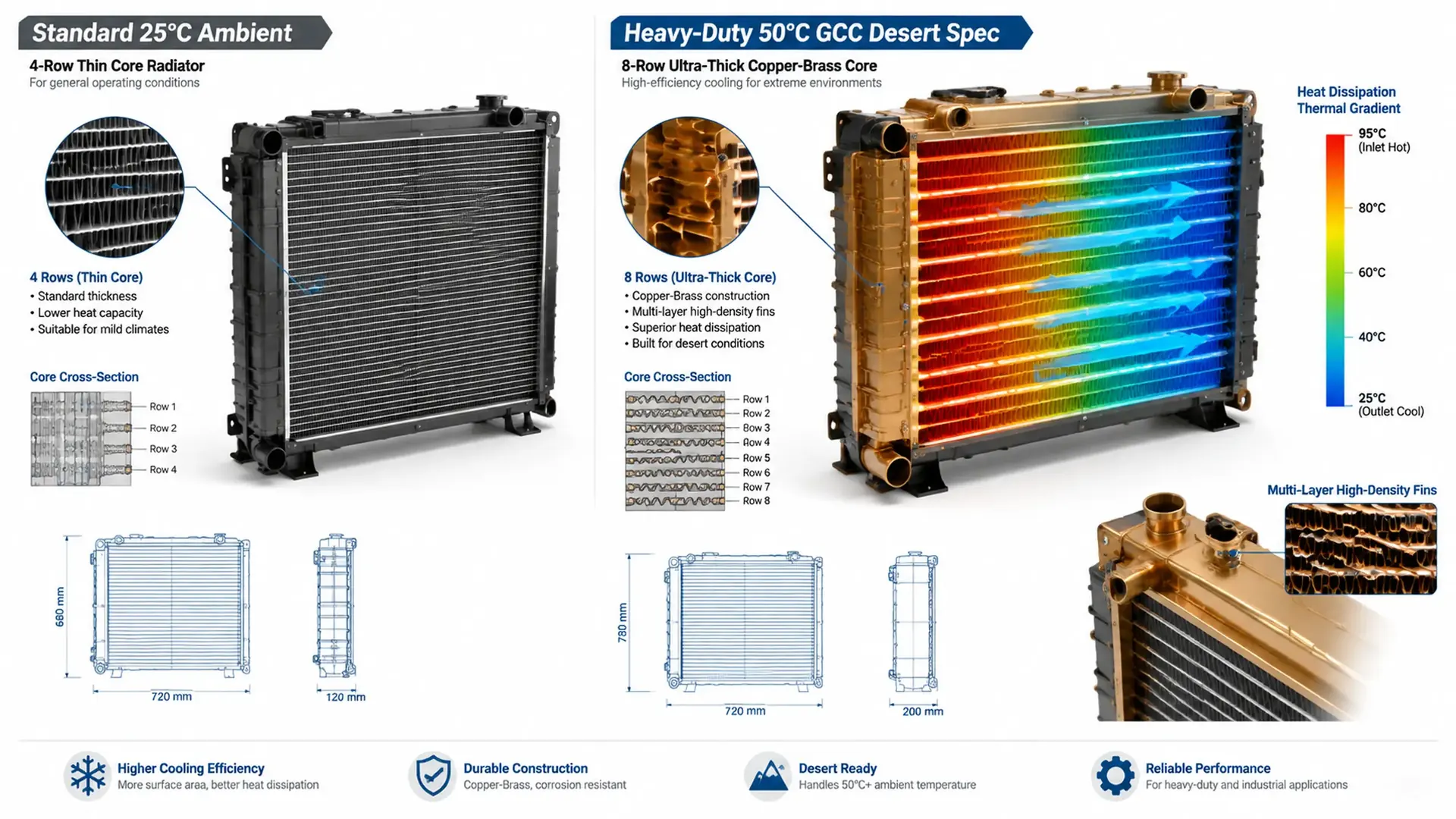
Figure 1: Core thickness engineering comparison: Transitioning from standard 120mm (4-row) to heavy-duty 200mm (8-row) copper-brass core for 50°C ambient derating.
Quick Engineering Summary: Sizing a diesel generator radiator for 50°C (122°F) high ambient temperatures in Middle East GCC conditions requires four critical design adjustments:
- Increase Core Thickness: Upgrade from a standard 4-row (120mm) to a heavy-duty 8-row (200mm) copper-brass core.
- Target a Low ITD: Maintain an Initial Temperature Difference (ITD) of 10°C to 15°C to account for narrow thermal deltas.
- Compensate Fan Static Pressure: Upgrade to high-flow airfoil fans to overcome the air resistance of an 8-row core in thin, hot air.
- Heavy-Duty Construction: Use copper-brass or specialized anti-corrosion coated aluminum to resist desert sand abrasion.
1. Core Depth Expansion: 4-Row vs. 8-Row Sizing
A 50°C high ambient radiator cannot be selected from a standard 25°C catalog rating. In standard climates around 25°C ambient, a 4-row thin radiator core of approximately 120mm thickness is sufficient to dissipate engine heat rejection. However, when ambient temperatures reach 50°C, the temperature differential between the coolant at approximately 95°C and the incoming air drops to only about 45°C.
To prevent engine high-temperature derating, the total heat-exchange surface area must be enlarged. As illustrated in Figure 1, shifting to an 8-row heavy-duty core of approximately 200mm thickness with multi-layer high-density cooling fins increases the surface contact area, allowing high thermal dissipation even with reduced air-to-coolant temperature differences.
The transition may use a 6-row core when the package needs more surface area but cannot accommodate the full depth of an 8-row radiator. The final core thickness must be confirmed against the generator heat rejection, available face area, fan curve and installation envelope.
2. LAT Calculation and Targeting Low ITD
When calculating the Leaving Air Temperature (LAT):
LAT = Ambient Temperature + (Heat Rejection / (Airflow × Specific Heat of Air))
Under 50°C conditions, targeting an Initial Temperature Difference (ITD) of 10°C to 15°C is required by this desert sizing method. A standard package assuming a 25°C to 30°C ITD will not provide the same thermal performance under full load in GCC territories.
The generator set radiator must be sized using the actual generator heat rejection and the design ambient temperature. Airflow, altitude and fan performance must be checked together because higher altitude and 50°C ambient air both reduce air density.
Key Sizing Parameters: Standard vs. 50°C Desert Specification
| Design Criteria | Standard Spec (25°C Ambient) | GCC Desert Spec (50°C Ambient) |
|---|---|---|
| Core Rows & Thickness | 4-Row (~120mm) | 8-Row (~200mm) Heavy-Duty |
| Target ITD | 20°C - 30°C | 10°C - 15°C |
| Core Construction | Aluminum / Plastic Tank | Copper-Brass + Multi-Layer Fins |
| Airflow Static Pressure | Standard Static Pressure | High-Static-Pressure Airfoil Fan |
3. Mitigating Reduced Air Density and High Static Pressure
Air density drops significantly at 50°C, to approximately 1.09 kg/m³ compared with 1.20 kg/m³ at standard temperature. An 8-row ultra-thick core also introduces notable air-side static resistance.
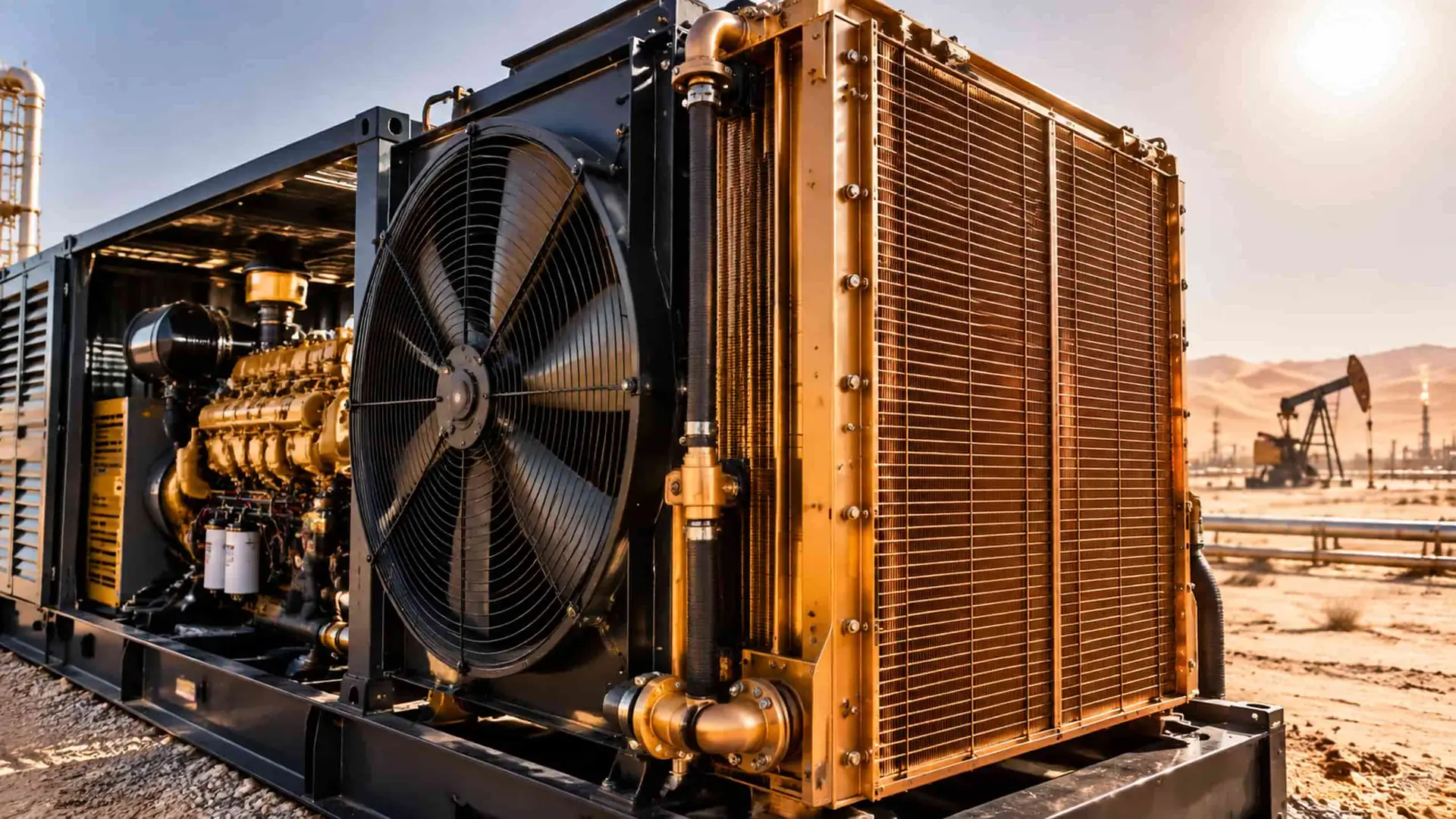
As shown in Figure 2, the thick radiator must be paired with a large-diameter, high-static-pressure airfoil cooling fan, driven by upgraded engine fan drive pulleys or independent heavy-duty electric motors. The fan drive, shaft power, bearing load and shroud clearance must be verified as part of the complete cooling package.
Materials and Construction for Desert Generator Radiators
A copper-brass generator radiator is often specified for desert duty because it resists high temperature and sand abrasion. Specialized anti-corrosion coated aluminum may be used where the cooling package, coolant chemistry and service requirements make it the better choice. The construction should resist:
- Sand and dust abrasion
- Continuous high ambient temperature
- Thermal cycling between hot days and cooler nights
- Corrosion and moisture exposure
- Pressure cycling and engine vibration
Specify the fin pitch, coating, cleaning access and fan guard together so the radiator maintains airflow throughout its service interval.
Installation and Maintenance for 50°C Ambient Generator Sets
- Keep the radiator clear of exhaust and hot-air recirculation.
- Provide enough service clearance to clean sand and dust from the core.
- Verify fan static pressure, speed, power and rotation after installation.
- Inspect fins for sand bridging, bent fins and coating damage.
- Check coolant temperature and pressure drop after each major cleaning.
- Protect electrical fan drives and sensors from heat, dust and vibration.
FAQ
How do you size a generator radiator for 50°C ambient temperature?
Increase core thickness from a standard 4-row to a 6-row or 8-row heavy-duty design where required, target a low ITD of 10°C to 15°C, upgrade fan static pressure for the thicker core and hot air, and select copper-brass or specialized anti-corrosion coated aluminum for desert environments.
What core thickness is used for 50°C ambient generator radiator sizing?
The engineering comparison uses a standard 4-row core around 120mm and a heavy-duty 8-row copper-brass core around 200mm. A 6-row core is a transition option when additional surface area is required within a limited envelope.
How is generator radiator LAT calculated?
LAT = Ambient Temperature + (Heat Rejection / (Airflow × Specific Heat of Air)). The calculation must use the actual generator heat rejection, airflow and 50°C ambient design condition.
Why is a high-static-pressure fan required at 50°C ambient?
An 8-row ultra-thick core has higher air-side resistance, while air density at 50°C is approximately 1.09 kg/m³ compared with 1.20 kg/m³ at standard temperature. A high-static-pressure airfoil fan is required to maintain airflow through the thicker core.
What material is recommended for a GCC desert generator radiator?
Use copper-brass or specialized anti-corrosion coated aluminum for desert environments. The material and coating should be selected for sand abrasion, high temperature and site moisture conditions.
Need a Sizing Calculation for 50°C Ambient Gen-Sets?
As a custom generator radiator manufacturer, TH supplies custom-built 6-row and 8-row copper-brass radiators engineered for Cummins, Perkins, MTU and CAT generator sets operating in Saudi Arabia, UAE and GCC desert environments.
Request a Custom Thermal Sizing Calculation and Quote
Need Help Selecting an Oil Cooler?
Send us your specs or drawings and our engineers will size the right cooler for you within 24 hours.
Get a Free Quote Chat on WhatsApp