
2026-08-05
Air-Cooled vs. Water-Cooled Oil Coolers: How to Choose
Air-cooled or water-cooled oil cooler? Compare working principle, efficiency, space, water availability and running cost to pick the right one for your hydraulic system.
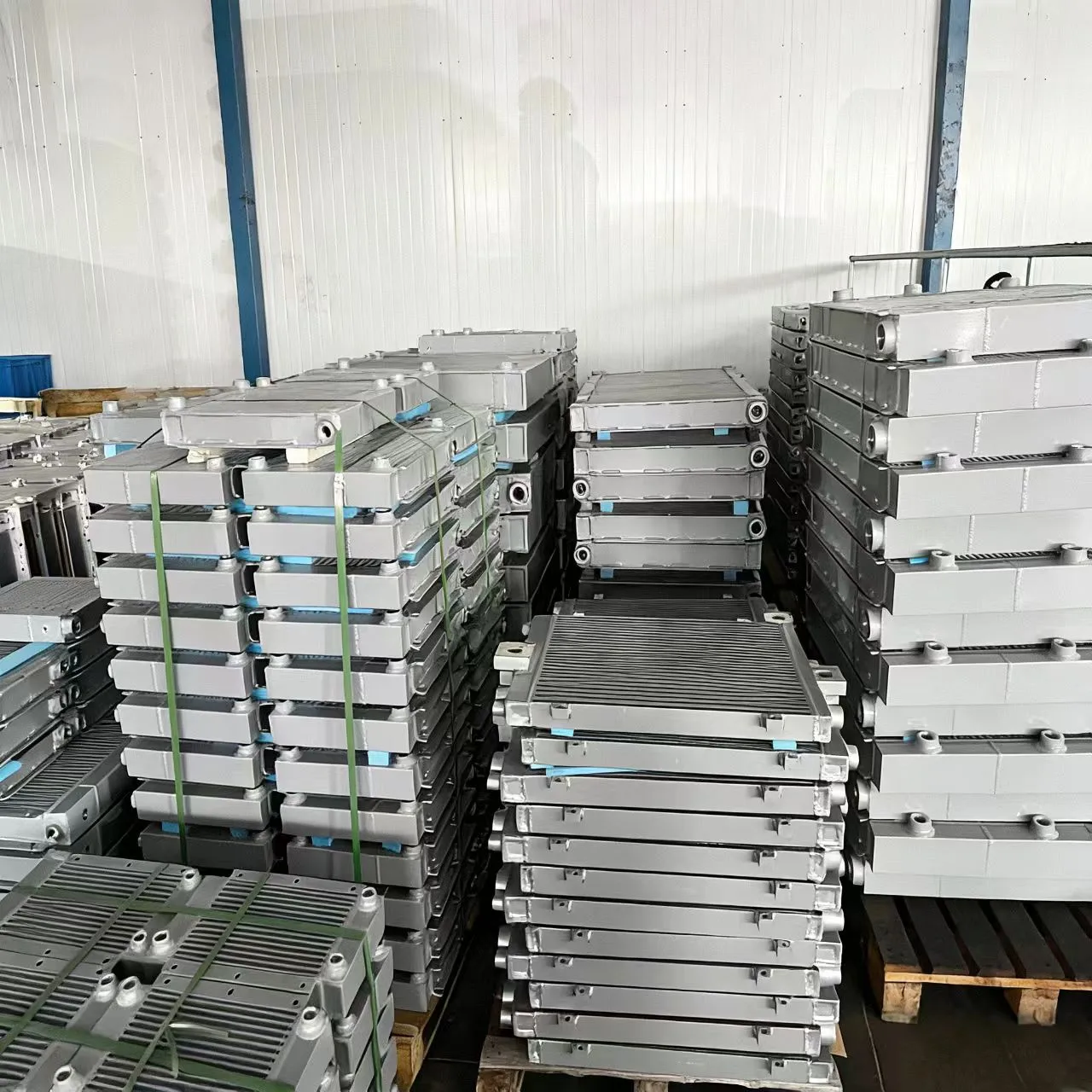
Choosing between an air-cooled and a water-cooled oil cooler is one of the most common questions we hear. Both are heat exchangers — they remove excess heat from oil by transferring it to another medium. The difference is that medium: air or water.
How Each Type Works
Air-Cooled Oil Cooler
Hot oil flows through internal passages in an aluminum core. Heat transfers to the plates and fins, and a fan blows ambient air across the fins to carry the heat away. The oil and the air never touch.
- Needs: an electric or engine-driven fan.
- Uses: ambient air at whatever temperature the site has.
Water-Cooled Oil Cooler
Hot oil flows through one set of passages and cooling water flows through another set, separated by a metal wall (often in counter-flow). Heat passes through the wall from the oil to the water. The oil and the water never mix.
- Needs: a clean, continuous supply of cooling water.
- Uses: water at whatever temperature is available (cooling tower, city water, etc.).
Comparison Table
| Factor | Air-Cooled | Water-Cooled |
|---|---|---|
| Cooling medium | Ambient air | Cooling water |
| Water supply needed | No | Yes |
| Heat-transfer efficiency | Lower | Higher |
| Size for same duty | Larger | Smaller |
| Installation | Simple, self-contained | Needs water piping and drain |
| Operating cost | Fan electricity only | Water + pumping (and water treatment) |
| Best for | Mobile machines, remote sites, no water available | Stationary plant with existing water supply |
When to Choose Air-Cooled
Choose an air-cooled oil cooler when:
- There is no reliable cooling water supply (excavators, trucks, remote installations).
- You want a simple, self-contained system with minimal plumbing.
- Ambient temperature is not too extreme, and space is not the main constraint.
- The application is mobile and must survive vibration.
When to Choose Water-Cooled
Choose a water-cooled oil cooler when:
- Cooling water is already available (hydraulic power units, machine shops, process plants).
- Space is tight and you need the most cooling per square meter.
- You need very high cooling capacity in a compact unit.
- Water temperature is stable and lower than the ambient air temperature.
The Practical Answer
There is no universal winner. The right choice depends on your site:
- Is clean water available? If no — air-cooled. If yes — consider water-cooled for compactness and efficiency.
- How much space do you have? Tight space favors water cooling.
- How hot is the environment? If the air is very hot, water cooling keeps more margin.
- What is your running-cost budget? Compare fan electricity vs. water and pumping costs.
If you are not sure, send us your flow rate, heat load, space and site conditions. Our engineers will recommend the most economical solution — usually within 24 hours.
Related Product Solutions
If your system has enough clean airflow, review our air-cooled oil cooler range. For compressors and industrial air circuits, the custom aluminum plate-fin compressed air cooler provides a compact forced-air solution.
Facing overheating issues in your hydraulic system? Send us your specs or drawings — our engineers will size the right cooler for you within 24 hours.
Need Help Selecting an Oil Cooler?
Send us your specs or drawings and our engineers will size the right cooler for you within 24 hours.
Get a Free Quote Chat on WhatsApp